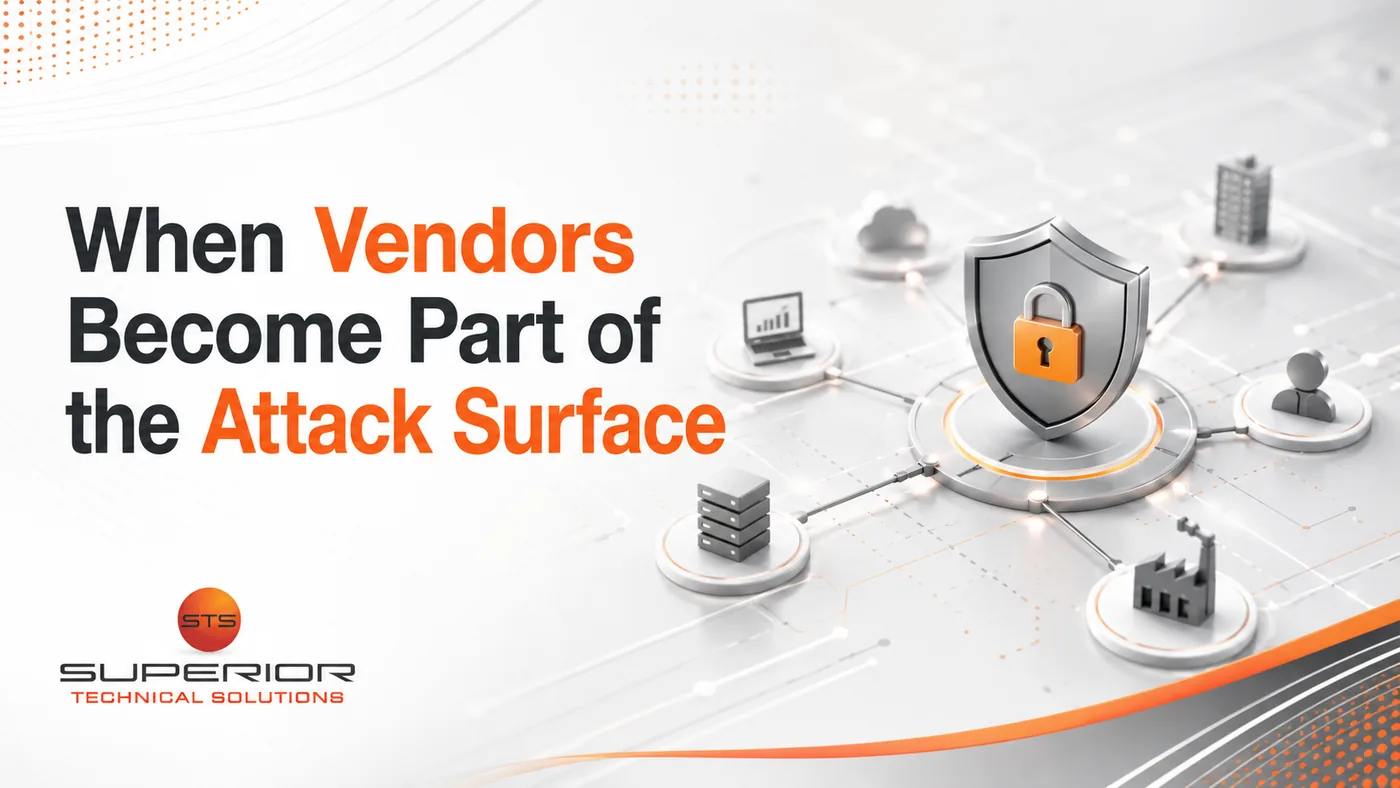
A business can have strong internal security controls and still be exposed through a vendor it barely thinks about. A SaaS application with access to company data, a cloud integration connected through an API, or a third-party service retaining an old set of credentials can create an indirect path into systems that the organization itself has carefully protected. As cloud adoption accelerates, vendor management is increasingly becoming a security issue rather than simply a procurement function.
SaaS Integrations Expand the Attack Surface
Software-as-a-Service (SaaS) platforms have become deeply embedded in business operations, from accounting and customer management to collaboration and data analysis. The convenience comes with a tradeoff: many of these applications need access to corporate identities, cloud data or application programming interfaces (APIs), which are connections that allow different software systems to communicate.
That access can become a security concern when vendors, integrations or permissions are poorly monitored. TierPoint identifies SaaS and cloud supply-chain risk as a major area of concern in 2026, noting that a compromised third-party service can potentially provide attackers with indirect access to critical systems.
Identity Management Extends to Vendors and Machines
The traditional concept of an employee having a username and password is no longer enough to describe the modern access environment. Cloud applications also rely on service accounts, APIs, automated workflows and other non-human identities that require credentials.
This creates what security teams increasingly call "identity sprawl": the accumulation of more accounts and permissions than an organization can easily track. Vendor accounts can add another layer, particularly when access remains active after a project ends or when permissions exceed what is actually required.
A least-privilege approach limits an identity to only the access necessary for its specific function. For higher-risk accounts, privileged access management can also provide temporary permissions that expire after a task is completed.
Why Vendor Security Was So Difficult to Control
The underlying problem is visibility. Organizations historically had much more control over the systems operating inside their own networks, while modern businesses increasingly depend on services outside their direct infrastructure.
Cloud computing has made those relationships more interconnected. A single application can depend on several external services, APIs and cloud platforms, each with its own security practices and access requirements. The shared-responsibility model — in which cloud providers and customers each handle different security responsibilities — can further complicate accountability when those boundaries are unclear.
What has changed is the availability of tools and practices for monitoring those relationships continuously. Organizations can increasingly track third-party access, enforce narrower permissions and gain centralized visibility across SaaS and cloud environments instead of relying solely on periodic vendor reviews.
Vendor Management Becomes Continuous Security Work
The shift does not mean every vendor represents an imminent security threat, nor does it eliminate the need for traditional vendor assessments. Rather, security is becoming a more continuous part of managing technology relationships.
The next stage will likely involve tighter controls around vendor identities, automated monitoring of integrations and greater scrutiny of the software supply chain. Those capabilities are developing alongside increasingly sophisticated cloud environments, but basic governance remains important. As businesses add more vendors, applications and automated connections, knowing who or what has access — and whether that access is still necessary — is becoming a fundamental part of maintaining a secure technology environment.